10/30/2026 · Dr. Veilleux
Candy, Sour Treats & Fizzy Drinks: How to Enjoy Your Favorites Without Hurting Your Teeth
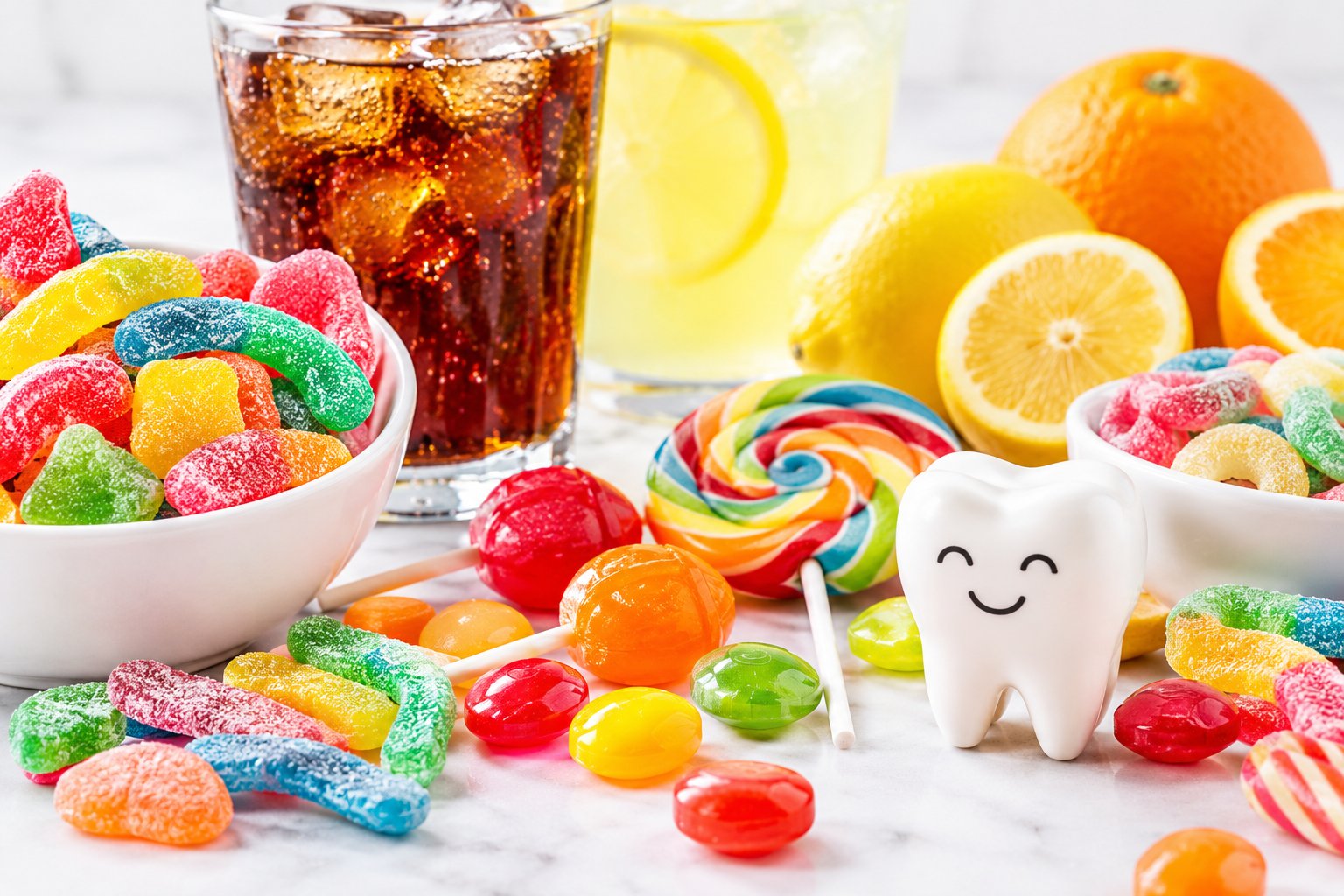
You don't have to give up every sweet treat to have a healthy smile! From sour gummies and hard candies to lemonade, soda, and sparkling drinks, some of our favorite foods and beverages can be tough on our teeth. The good news? Understanding how they affect your enamel can help you enjoy them more wisely.
At Healthy Smiles, we believe great dental care is about helping you make informed choices—not telling you that you can never enjoy your favorite foods again!
It's Not Just About Sugar—It's Also About Acid
Most people know that sugar can contribute to cavities, but acidity is another important part of the story.
Your teeth are protected by enamel, the hard outer layer that shields them from everyday wear and damage. When your mouth becomes too acidic, minerals can begin to leave the enamel in a process called demineralization. Over time, repeated acid exposure can weaken enamel and contribute to erosion.
Here's the important distinction:
Sugar feeds cavity-causing bacteria. These bacteria produce acids that attack your enamel and can lead to cavities.
Acidic foods and drinks can attack enamel directly. They can soften the tooth surface even when the product contains little or no sugar.
That means sugar-free doesn't automatically mean tooth-friendly!
What Does pH Have to Do With Your Teeth?
pH measures how acidic or alkaline something is. The scale runs from 0 to 14, with lower numbers being more acidic.
For example, lemon juice and many sodas have a pH around 2–3, while some fruit juices and sports drinks fall around 3–5. Water is generally close to neutral at pH 7.
Enamel can begin to dissolve when the pH at its surface drops to around 5.5, although the exact threshold varies depending on saliva and other conditions. The lower the pH, the more acidic the substance; but pH isn't the only factor. The type and amount of acid also matter.
This is why a drink can be sugar-free and still contribute to enamel erosion. Sugar and acid affect your teeth in different ways.
The Biggest Factor You May Be Overlooking: Frequency
Imagine two people enjoying the same soda.
One drinks it with lunch and then switches to water. The other sips it throughout the afternoon, takes a few more sips during the drive home, and finishes the rest after dinner.
Even if they consume the same amount, the second person may expose their teeth to acid more frequently.
Every time you eat or drink something acidic, your enamel can experience another acid attack. Your saliva needs time to neutralize acids and help replenish lost minerals. Frequent snacking or sipping doesn't give your mouth as much time to recover between exposures.
The takeaway? It's not just what you eat or drink. It's how often you expose your teeth to it.
Which Treats Deserve a Little Extra Attention?
Sour Candies
Sour gummies, sour belts, and other tart candies can be a double whammy. They often contain sugar that feeds cavity-causing bacteria and acids that can soften enamel directly. Sticky candies may also cling to your teeth, prolonging exposure.
A smarter approach: Enjoy sour candy occasionally, preferably in one sitting rather than grazing on it throughout the day. Drink water afterward.
Hard Candies and Lollipops
Hard candies may seem harmless because they aren't sticky or chewy, but they can keep sugar in your mouth for a long time as they dissolve. Repeated exposure gives cavity-causing bacteria more opportunities to produce acid.
A smarter approach: Enjoy your candy in a single occasion instead of sucking on several pieces throughout the day. Avoid biting down on hard candies, which can also chip or crack teeth.
Soda and Energy Drinks
Regular soda combines sugar and acidity, while diet soda can still be acidic enough to contribute to enamel erosion. Energy drinks may also contain substantial amounts of acid, regardless of their sugar content.
A smarter approach: Have your drink with a meal instead of sipping it for hours. Use water as your everyday drink between meals.
Lemonade, Citrus Fruits, and Fruit Juices
Lemons, limes, oranges, and their juices can be nutritious, but their natural acids can still soften enamel. Healthy ingredients don't automatically mean a food or drink is harmless to your teeth.
A smarter approach: Enjoy citrus as part of a meal rather than continually sipping juice or sucking on lemon slices. Follow with water.
Pickles, Vinegar-Based Foods, and Sour Snacks
Vinegar-based dressings, pickles, and other tangy foods can also contribute to acid exposure. You don't need to avoid them, but frequent exposure can add up.
A smarter approach: Enjoy them with meals and give your teeth a break between acidic foods and drinks.
Five Simple Ways to Protect Your Enamel
You don't need to live without candy, soda, or sour foods to take care of your teeth. A few small habits can make a meaningful difference.
1. Enjoy treats at planned times. Have candy or an acidic drink in one sitting instead of spreading it throughout the day.
2. Choose water between meals. Water helps rinse away food residue and supports saliva's natural protective role.
3. Don't brush immediately after acid exposure. Acid can temporarily soften enamel. Wait about 30–60 minutes before brushing after acidic foods or drinks.
4. Brush twice a day with fluoride toothpaste. Fluoride helps strengthen enamel and supports remineralization. Clean between your teeth daily, too.
5. Give your saliva time to work. Avoid constant sipping and snacking. Sugar-free gum can also stimulate saliva flow if it's appropriate for you.
You Can Enjoy the Sweet Stuff—Just Be Strategic!
A healthy smile doesn't mean saying goodbye to every candy, sour snack, or fizzy drink you love. It means understanding how those choices affect your teeth and making small adjustments that help protect them.
Remember these three things:
Frequency matters: Repeated exposure means repeated acid attacks.
pH matters: Highly acidic foods and drinks can weaken enamel, even without sugar.
Habits matter: Water, fluoride toothpaste, and smart timing can help protect your smile.
And don't forget that regular dental visits can help identify signs of cavities, enamel erosion, and other concerns before they become bigger problems.
Have questions about protecting your enamel? The team at Healthy Smiles is here to help you find a dental routine that fits your real life; because taking care of your smile shouldn't mean giving up all the things you enjoy.
Healthy Smiles — Great dentistry treats teeth. Exceptional dentistry cares for people.